
Diamond Education
The 4 C'sDiamond Anatomy & Cut Quality
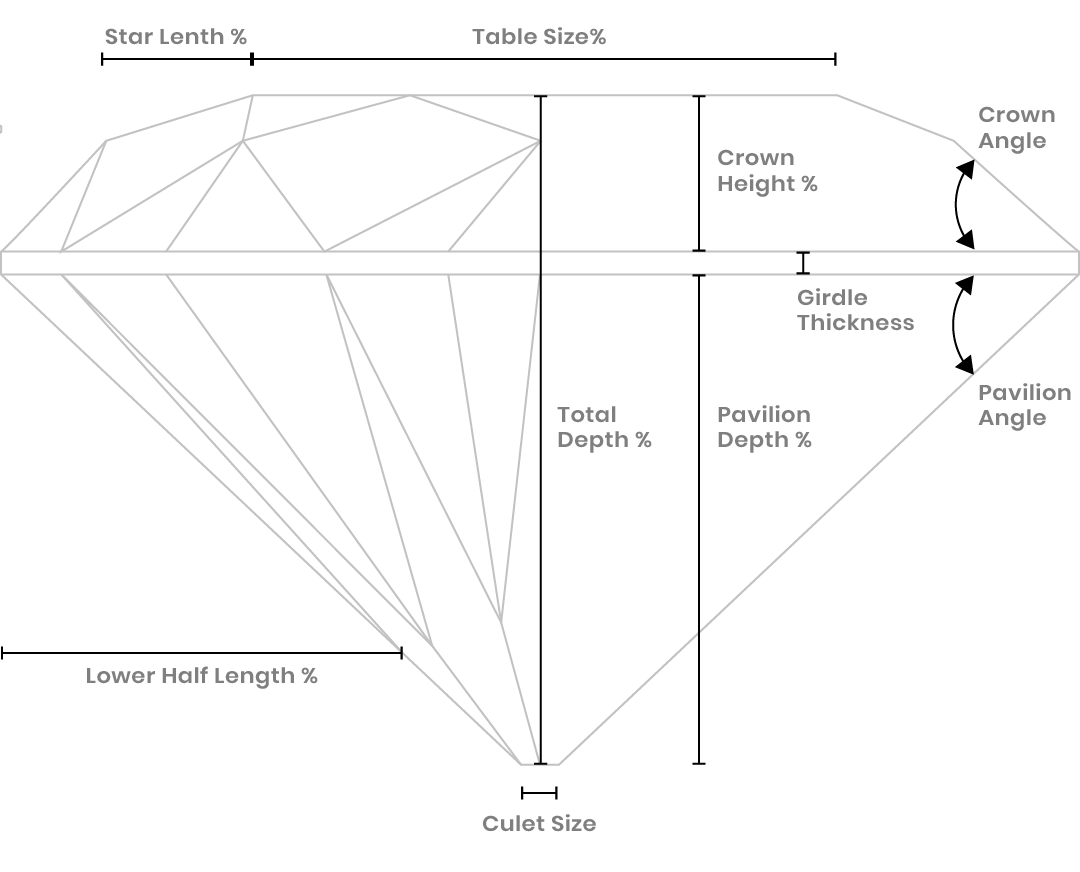
Every diamond tells a story through its structure. Understanding the anatomy of a diamond — from table to culet — helps you see beyond sparkle and evaluate real quality. This section breaks down how a diamond’s cut determines the way light travels through it, creating the brilliance and fire that make each stone unique.
Understanding the 4 C’s of Diamonds Shopping
Every diamond is graded on four core characteristics — Clarity, Cut, Color, and Carat. Together, these factors determine a diamond’s rarity, beauty, and value. Knowing how they work gives you the confidence to choose a diamond that fits both your taste and your budget.
Clarity
Clarity measures the presence of internal inclusions or external blemishes — natural characteristics formed as the diamond crystallized deep within the earth. Fewer imperfections generally mean higher clarity and a clearer path for light to pass through the stone.


Diamond Clarity Descriptions
Cut
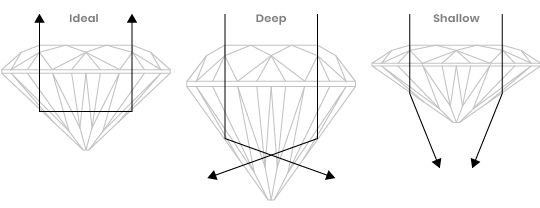
Cut is widely considered the most important of the 4 C’s, since it has the greatest impact on a diamond’s sparkle. A well-cut diamond reflects light beautifully from facet to facet, while a poorly cut stone can appear dull even with excellent clarity and color.


Diamond Clarity Descriptions
Color
Color grading measures the absence of color in a diamond — the less color, the higher the grade, since a colorless stone allows more light to pass through and refract. Grades range from D (colorless) to Z (light yellow or brown).


Diamond Color Descriptions
Carat (Size)
Carat refers to a diamond’s weight, not its size — one carat equals 200 milligrams. Because larger rough diamonds are rarer, price increases exponentially with carat weight, especially at key benchmarks like 1.00 or 2.00 carats.

